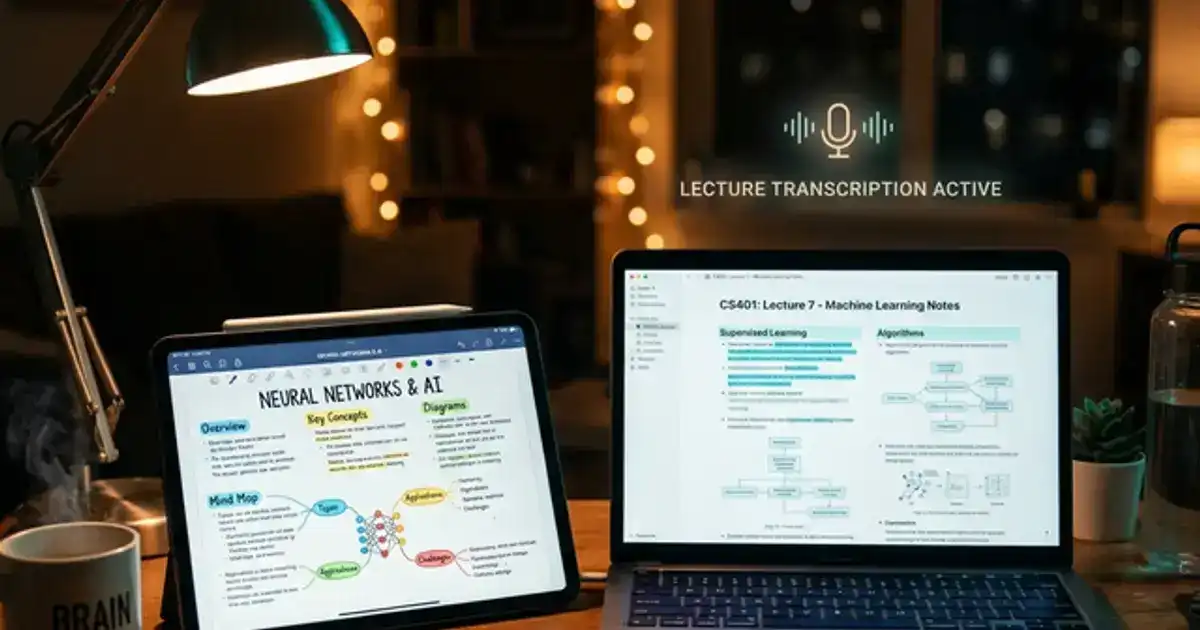
The average college student juggles 4-5 courses, a part-time job, extracurriculars, a social life, and basic human needs like eating and sleeping. Most students manage this with mental notes, phone reminders, and low-grade anxiety. AI productivity tools replace this chaos with systems that actually work.
This guide covers the best AI productivity tools organized by what they solve: scheduling, task management, communication, focus, and organization. Every recommendation includes a free tier sufficient for student use.
The goal is not to add more tools. It is to find the 2-3 tools that eliminate the most friction from your daily workflow.
AI Productivity Tools at a Glance
| Tool | Category | Best For | Free Tier |
|---|---|---|---|
| Notion AI | Organization | All-in-one workspace, notes + tasks + projects | Yes |
| ChatGPT | Task Processing | Email drafting, quick planning, brainstorming | Yes |
| Google Calendar + Gemini | Scheduling | Smart event creation, schedule optimization | Yes |
| Todoist | Task Management | AI-prioritized to-do lists, natural language input | Yes |
| Grammarly | Communication | Email and assignment grammar, tone adjustment | Yes |
| Forest / Focus apps | Focus | Distraction blocking, focus session tracking | Limited |
Notion AI: The Student Command Center
Notion replaces scattered Google Docs, random phone notes, and forgotten sticky notes with one organized workspace. Add AI and it becomes a workspace that thinks.
The student dashboard setup. Create a main page with linked databases for: Assignments (with due dates, course, status), Class Notes (organized by course and date), Projects (for group work), and a Weekly Planner view. Notion AI can summarize your week, identify upcoming deadlines, and extract action items from meeting notes.
Morning briefing prompt (Notion AI):
"Summarize my upcoming week: what assignments are due, what events are scheduled, and what tasks are overdue. Prioritize by urgency and importance. Identify any potential time conflicts."
AI-powered note processing. After each class, paste your raw notes into Notion and ask AI to organize them with headers, highlight key terms, and extract potential exam questions. This transforms passive note-taking into active study preparation. For the complete note-taking system, see our AI note-taking guide.
Templates for everything. Create reusable structures: meeting notes template, project plan template, weekly review template. Create each once, duplicate every time you need it. This eliminates setup friction that makes organization feel like extra work.
Database views for different contexts. The same Notion database can display differently depending on what you need. Your assignment database can show a calendar view (when things are due), a kanban board (what stage each task is in), or a filtered list (only showing this week's assignments). Switch between views based on whether you are planning the week or choosing your next task. This flexibility means one system serves multiple workflows without duplicate data entry.
Weekly reviews in Notion. Every Sunday, spend 15 minutes in Notion reviewing your week. Ask Notion AI: "What did I complete this week? What is overdue? What is due next week that I have not started?" This weekly review habit is the single most impactful productivity practice you can adopt. It takes 15 minutes and prevents the entire week from becoming reactive instead of proactive. Students who do weekly reviews report feeling significantly less stressed because they always know what is coming next.
Automating Repetitive Tasks
Students lose surprising amounts of time on repetitive tasks that AI can automate entirely:
Discussion board posts. Many courses require weekly discussion posts with a formulaic structure (state your position, cite the reading, respond to two classmates). ChatGPT can draft the structure: "Create an outline for a 200-word discussion post about [topic] that references [assigned reading]. Include a thesis statement, one supporting argument with a citation placeholder, and a question for classmates." You fill in the substance; AI handles the format. This cuts a 30-minute task to 10 minutes.
Citation formatting. Manually formatting citations in APA, MLA, or Chicago style wastes time. Ask ChatGPT: "Format this source as APA 7th edition: [paste source details]." AI handles the tedious formatting rules so you can focus on the actual research and writing. For larger projects, Zotero with AI integration automates the entire bibliography.
Meeting summaries. After a group project meeting, paste your rough notes into ChatGPT: "Summarize this meeting and extract: (1) decisions made, (2) action items with assigned owners, (3) unresolved questions for next meeting." Send this summary to your group. This takes 30 seconds and prevents the "what did we decide?" confusion that derails group projects. The groups that document decisions are the groups that execute effectively.
ChatGPT: The Universal Task Processor
ChatGPT is the Swiss Army knife of student productivity. Not the best at any single task, but it handles nearly everything adequately, making it the default for quick processing.
Email drafting. Students spend absurd time writing emails to professors. ChatGPT cuts this to seconds:
Email prompt:
"Draft a professional email to my [course] professor about [reason]. Tone: respectful and concise. Include: [specific details]. Keep it under 100 words."
Task breakdown. When an assignment feels overwhelming, ChatGPT breaks it into manageable steps: "Break down this assignment into 5-7 specific tasks I can complete in 30-60 minute sessions. Order them logically. Include estimated time for each." This eliminates procrastination caused by not knowing where to start.
Quick research summaries. Need a 2-minute overview before diving into assigned reading? "Give me a 3-paragraph overview of [topic] at an undergraduate level, including the key debate in the field and the 2-3 most important concepts." Context makes the reading more productive.
Todoist: AI-Powered Task Prioritization
Todoist's AI features solve the biggest task management problem: deciding what to do next. When you have 15 tasks across 5 courses, choosing which one to start with consumes mental energy before you even begin working.
Natural language input. Type "Finish Biology lab report by Friday at 5pm priority 1" and Todoist automatically parses the task name, due date, time, and priority level. No clicking through menus or dropdown selections. This natural language approach means adding tasks takes seconds, which is critical because any friction in task entry means tasks do not get entered at all.
AI task suggestions. Todoist's AI can suggest optimal times for tasks based on your completion patterns, recommend priority levels based on deadlines and task complexity, and identify tasks you are likely to procrastinate on. This data-driven prioritization beats the gut-feeling approach most students use.
The daily highlight method. Each morning, look at your Todoist list and pick the one task that will make today feel productive if you complete it. This is your daily highlight. Complete this task first, before checking email or social media. Todoist's priority flagging system supports this workflow: flag your daily highlight as Priority 1 and tackle it immediately.
Google Calendar with Gemini: Smart Scheduling
Gemini integration in Google Calendar adds AI-powered scheduling to the calendar most students already use. No new app required.
Event creation from natural language. Tell Gemini: "Schedule 2 hours of Biology study every Tuesday and Thursday before my 3pm class, starting next week." Gemini creates the recurring events, checks for conflicts with existing events, and adds them to your calendar. This conversational scheduling eliminates the tedious process of manually creating repeated events.
Schedule analysis. Ask Gemini to review your calendar: "Look at my schedule for the next two weeks and identify: (1) days where I am overcommitted, (2) open blocks I could use for studying, (3) potential conflicts between commitments." This bird's-eye analysis catches scheduling problems before they become crises.
Time blocking for deep work. Block specific hours on your calendar for focused study, and treat them with the same commitment as a class. If it is on the calendar, it happens. If it is just a vague intention, it probably does not. Gemini can suggest optimal times for deep work blocks based on your existing schedule patterns and energy levels throughout the day.
Building a Semester-Long Productivity System
Daily productivity is important, but semester-long systems prevent the mid-semester collapse that affects most students. Here is how to build one:
Semester audit prompt (every 4 weeks):
"Here is my productivity data for the last month: [hours studied per subject, assignments completed on time vs late, grades received]. Analyze: (1) which subjects am I under-investing time in relative to their difficulty? (2) Am I consistently finishing assignments on time or scrambling? (3) Based on upcoming midterms and finals, what should I adjust for next month?"
This monthly check-in prevents the common pattern where students cruise through the first half of the semester, realize they are behind at midterms, and panic-study through the second half. AI spots the drift early so you can correct course before it becomes a crisis.
End-of-semester reflection. After finals, paste your semester data into ChatGPT: "Here is my complete semester data: [grades, study hours, tools used, what worked, what did not]. What should I change for next semester?" This reflection produces specific, actionable improvements for the next semester rather than vague resolutions that never stick.
Want a structured AI study system?
Our study plan guide shows you how to create an AI-powered schedule that adapts to your semester.
Create Your AI Study Plan →AI for Communication and Email
Students send and receive dozens of emails per week: professor communication, group project coordination, club administration, job applications. AI handles the drafting so you spend 30 seconds instead of 15 minutes per email.
Gemini in Gmail. Gemini integrates directly into Gmail. It drafts replies, summarizes email threads, and suggests responses. For students receiving dozens of group project emails, thread summarization saves significant time.
Professional tone adjustment. Grammarly's tone detector helps match writing to context. An email to your professor should be more formal than a message to your study group. Grammarly flags casual language in professional contexts and suggests alternatives.
The rule: AI drafts, you edit and send. Always read and adjust AI-generated emails to sound like you. Professors develop a sense of each student's communication style over a semester. A sudden shift to perfectly polished, generic-sounding emails is noticeable and counterproductive.
AI for Focus and Deep Work
Productivity tools are worthless if you cannot focus during study sessions. AI helps here too:
ChatGPT as a focus coach. Before a study session, tell ChatGPT: "I have 2 hours to study. I need to cover [topics]. Create a Pomodoro schedule with specific tasks for each 25-minute session. Include accountability check-in questions I should answer at the end of each Pomodoro." This structured approach beats vague "I should study" intentions every time.
Distraction logging. When you catch yourself reaching for your phone during a study session, note the trigger. After a week, paste your distraction log into ChatGPT: "Analyze my distraction patterns. When do I get distracted most? What triggers are most common? Suggest 3 specific strategies for my top 3 distractions." Data-driven focus improvement beats willpower alone.
End-of-day review. Spend 5 minutes asking ChatGPT: "Here is what I planned vs. what I completed. [paste both]. What patterns do you notice? Am I overestimating? Should I adjust my daily planning?" This daily reflection identifies productivity leaks you cannot see yourself.
Building Your Minimum Viable Productivity System
The biggest productivity mistake is adopting too many tools at once. Start with the minimum and add only when you feel a specific pain point:
Week 1: ChatGPT + Google Calendar
Use ChatGPT to generate a weekly study schedule. Put it in Google Calendar. Follow it for one week. Use ChatGPT for email drafting. This alone saves 3-5 hours per week for most students.
Week 2: Add Notion for notes and tasks
If you feel scattered across too many apps, consolidate into Notion. Create your assignment tracker and note system. Use Notion AI to process notes daily after each class.
Week 3: Add Grammarly for writing
Install the browser extension. It works in every text field: emails, assignments, discussion posts. Passive writing improvement with zero additional effort required.
Week 4: Evaluate and optimize
After one month, review: What is working? What am I not using? What pain points remain? Drop unused tools. Add tools only for specific unmet needs. The system should simplify your life, not complicate it.
Productivity Mistakes Students Make
Spending more time organizing than doing. If you spend 2 hours setting up a Notion dashboard and 0 hours studying, you were procrastinating with aesthetics. Start with the simplest possible system and refine only after using it for 2 weeks.
Tool-hopping. Trying every new productivity app is itself a productivity drain. Pick 2-3 tools, commit for one month, and evaluate. Switching tools every week means you never develop the habits that make any system effective.
Ignoring rest and recovery. Productivity is not about maximizing every minute. Students who schedule 100% of their time burn out by midterms. The most productive students protect their rest time as aggressively as their study time. Schedule rest deliberately, not as whatever time is left over.
Confusing busyness with productivity. Responding to 50 emails, reorganizing notes, and color-coding your calendar feels productive but accomplishes nothing toward your actual goals. Real productivity is completing the difficult tasks: writing the essay, solving the problem set, reading the chapter. AI should handle busywork so you can focus on real work.
Start this week
Today: paste the study plan prompt into ChatGPT with your actual courses. Tomorrow: put the schedule in Google Calendar. This week: use ChatGPT to draft every email. One week of this system will show you how much time you have been wasting.