

Jump to section (7)
- 1.The 5-Story "Swiss Army Knife" Matrix for Students Without Experience
- 2.Step 1: Decode the Job Posting & Build Your 5 STAR-L Stories
- 3.Step 2: Run a Live Mock Interview That Drills "Second-Level" Follow-Ups
- 4.Step 3: Master Technical / Case Walkthroughs & Reverse Questions
- 5.Rehearse Behavioral & Technical Interviews With Vertech Academy
- 6.Final Verdict: Preparation Builds Confidence; Live Scripts Destroy Trust
- 7.Frequently Asked Questions
The biggest mistake students make with AI in job interviews is trying to read real-time AI answers off a second monitor during a live Zoom call (which gets you blacklisted immediately). Use AI 48 hours before the interview to decode the job description, turn your class projects into 5 versatile STAR-L stories, and run out-loud voice mock interviews.
What are you trying to solve right now?
Pick your bottleneck to compare 2026 pricing caps, free student promos, or test our matched AI coach.
Claim free student promos first—never stack two $20/mo chatbots.
Verify your .edu email for Google AI Pro (12 months free) or Perplexity Education ($10/mo), then pair it with our Socratic study prompts so AI quizzes you instead of writing generic summaries.
Compare Deep-Dive Guides (Save $15–$20/mo):
First, let us save your career from the #1 viral trap of 2026: never use a "real-time AI interview teleprompter" during a live Zoom or Teams interview. Campus recruiters at tech companies, banks, and consulting firms spot the 3-second pause, the horizontal eye movement across your monitor, and the robotic buzzwords within 30 seconds, and they will permanently blacklist your profile. The winning way to use AI is 48 hours before your interview as a ruthless mock interviewer and story architect.
Even if your resume only has college class projects, a campus club, and a summer barista job (see our 2026 AI student resume guide), you can out-prepare applicants from Ivy League schools by building a 5-Story STAR-L Bank with our Brainstorming Expert and drilling live curveballs with our Critical Thinking Expert.
6 Ways AI Turns College Projects Into Job Offers
-
 Job Description Hidden DecoderExtracts the 5 actual problems the hiring manager needs solved
-
 5-Story STAR-L Matrix BuilderTurns group projects & part-time jobs into 90-second stories
-
 60-Second "Tell Me About Yourself"Builds a Present → Past → Future pitch tailored to the role
-
 Perplexity Company ReconFinds recent earnings calls, product launches & competitor news
-
🎙️Live Follow-Up Drill SimulatorProbes your STAR stories with 2nd-level "Why did you choose X?" questions
-
❓Insider Reverse QuestionsCrafts memorable closing questions to ask your interviewer
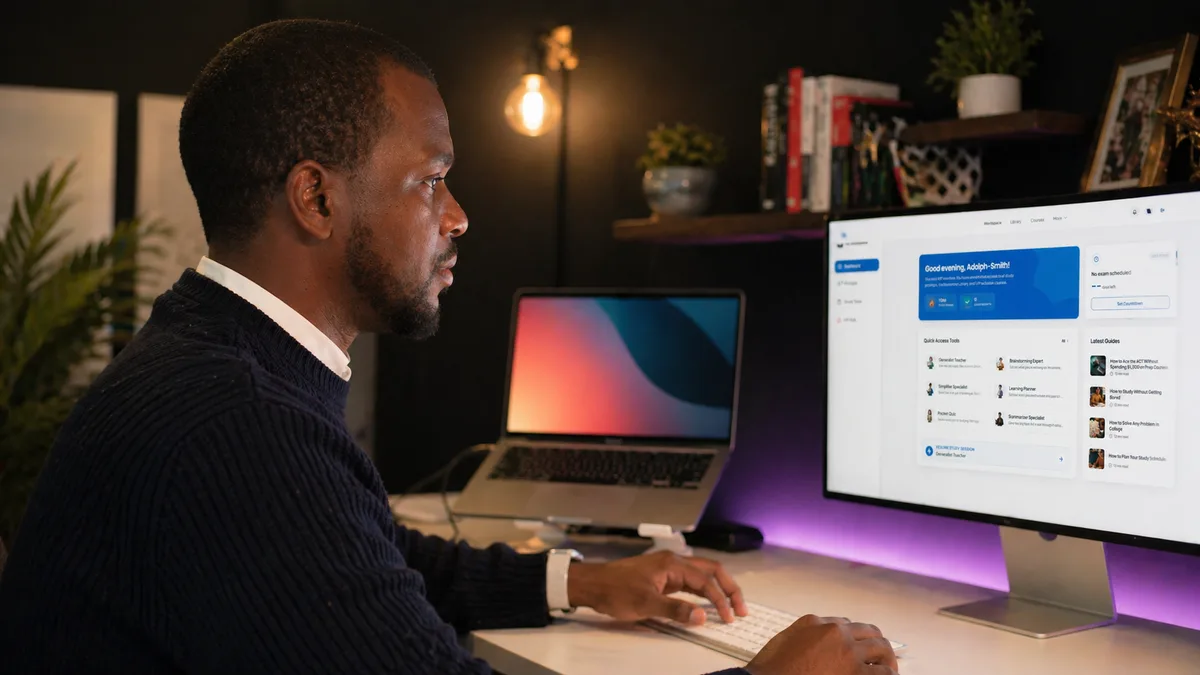
The 5-Story "Swiss Army Knife" Matrix for Students Without Experience
You do not need to prepare 40 different answers for 40 behavioral questions. Every behavioral question a recruiter asks falls into one of 5 core competency buckets. Here is how to map your existing college experiences to all 5 buckets:
How 5 Student Experiences Answer 95% of Behavioral Interview Questions
| Story Bucket | Questions It Answers | Student Experience You Can Use | What the Recruiter Is Actually Testing |
|---|---|---|---|
| 1. The Messy Teammate / Conflict Story | "Disagreement with a coworker" / "Difficult team member" | A college group project where a teammate missed deadlines or disagreed on direction | Empathy + resolving issues 1-on-1 without trash-talking peers |
| 2. The Crunch-Time / Prioritization Story | "Tight deadline" / "Competing priorities" / "Working under pressure" | Finals week overlap + working 15 hrs/wk at a campus or retail job | How you triage tasks, communicate early, and protect quality |
| 3. The Fast-Learner / Ambiguity Story | "Learned a skill fast" / "Solved a problem with no instructions" | Teaching yourself Python, Figma, SQL, or financial modeling for a hackathon/paper | Resourcefulness (that you won't need hand-holding every 10 mins) |
| 4. The Mistake / Pivot Story | "Tell me about a time you failed" / "Critical feedback" | A broken lab experiment, a club event with low turnout, or a rough first draft | Zero defensiveness + building a system so the mistake never repeats |
| 5. The Initiative / Impact Story | "Leadership without a title" / "Proudest accomplishment" | Automating a spreadsheet at a summer job or growing a student org by 40% | Ownership mindset + quantifying your impact with real numbers |
Spend under 20 seconds setting up the Situation
Nervous students spend two full minutes explaining the background of their class project and only 10 seconds on what they actually did. Keep Situation + Task under 25%, spend 50% on YOUR specific Actions, and 25% on the Result + Learning.
The company is interviewing you, not your group
When describing a college group project, if you say "We analyzed the data and we built the deck," the interviewer has no idea if you did 90% of the work or 0%. Always specify your exact individual contribution.
Never recite your resume from high school forward
When asked "Tell me about yourself," use Jeff Su's 60-second formula: Present (major + focus area), Past (2 relevant proof points from projects/work), and Future (why this exact company and role is your logical next step).
Tape 1 sticky note next to your webcam
For virtual interviews, never keep a ChatGPT window open on your screen. Write 3-word trigger titles for your 5 STAR stories on a physical sticky note placed right beside your camera lens so your eyes stay locked on the interviewer.
Step 1: Decode the Job Posting & Build Your 5 STAR-L Stories
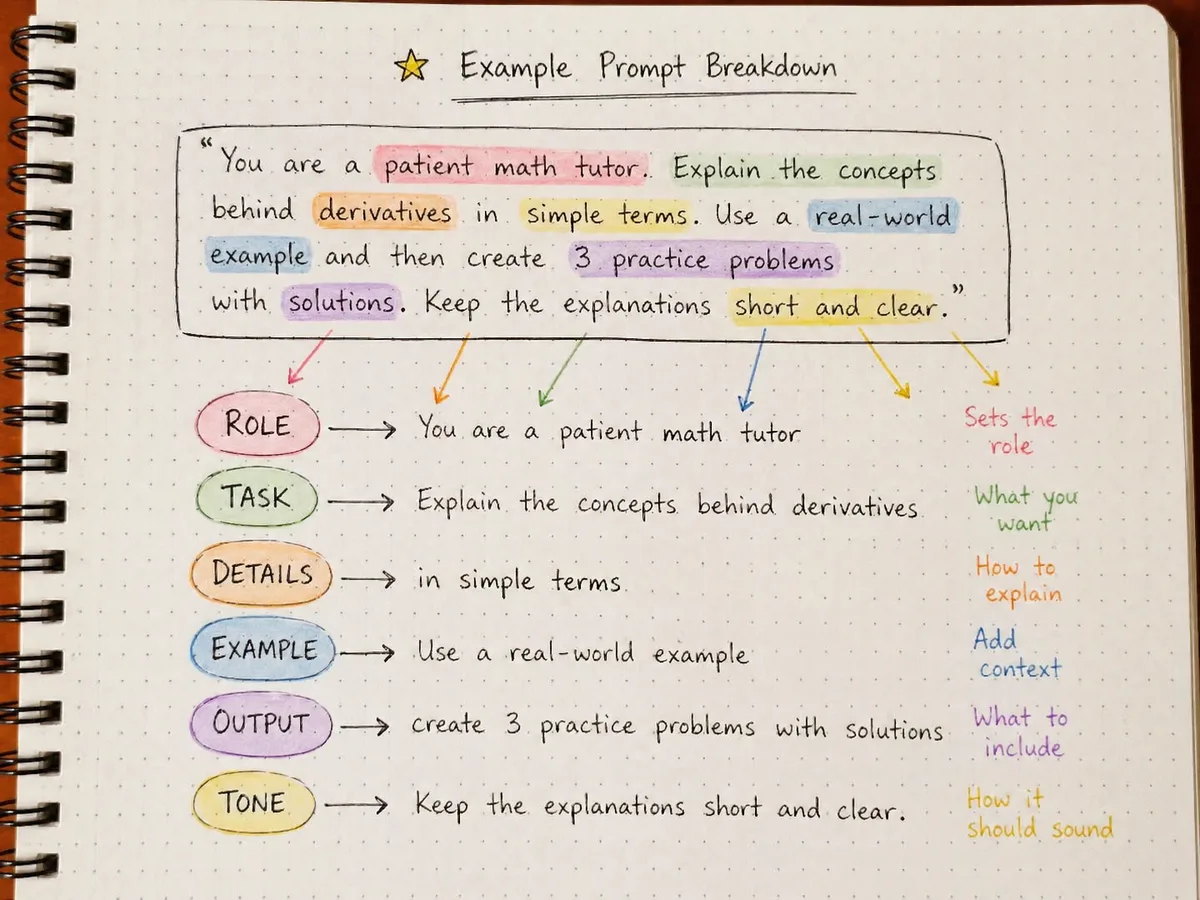
Job descriptions are written in HR code. When a posting says "Ability to thrive in a fast-paced, ambiguous environment," it actually means: "Our team is launching a new product and nobody will have time to write you step-by-step checklists." Paste the job posting and your student resume into Prompt #1 (or our Brainstorming Expert) to map your experiences to their real needs:
Step 2: Run a Live Mock Interview That Drills "Second-Level" Follow-Ups
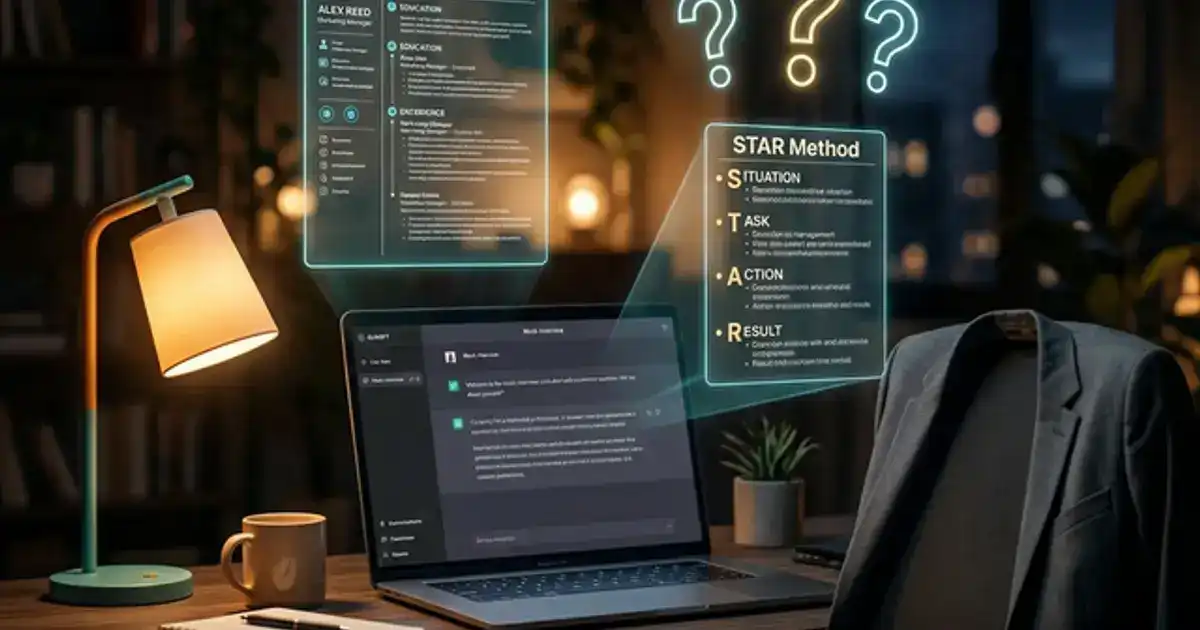
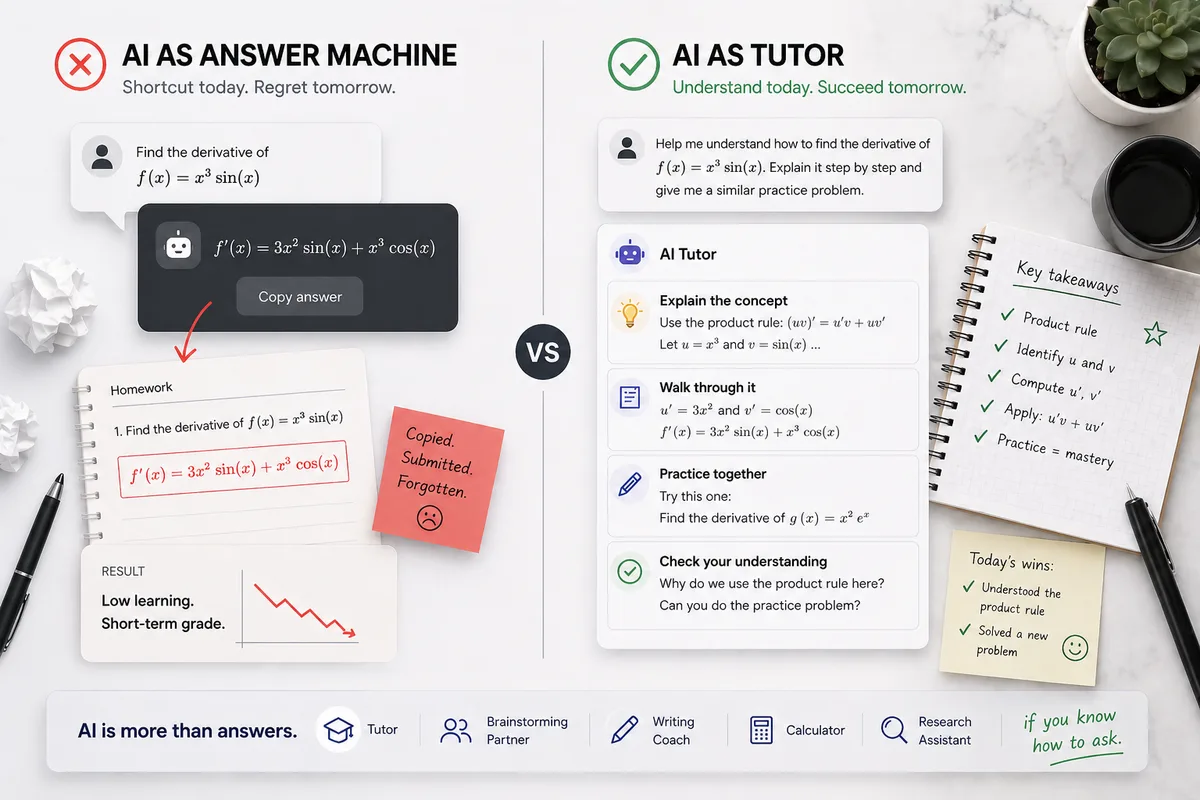
Most students practice answering Question #1 ("Tell me about a project you worked on"), but freeze when the interviewer asks the second-level follow-up question: "Interesting! Why did you choose that specific method over alternative X, and what would you change if you had two more weeks?" Use Prompt #2 with ChatGPT Voice Mode or our Critical Thinking Expert to practice unscripted follow-ups:
Step 3: Master Technical / Case Walkthroughs & Reverse Questions
Whether you are interviewing for software engineering (see our best AI coding tools for students guide and Coding Tutor), finance/consulting case interviews, or marketing analytics, the interviewer cares more about how you think out loud than whether you guess the final number in 5 seconds. And when the interviewer says "Do you have any questions for me?" at the end of the call, never ask generic questions you could have Googled.
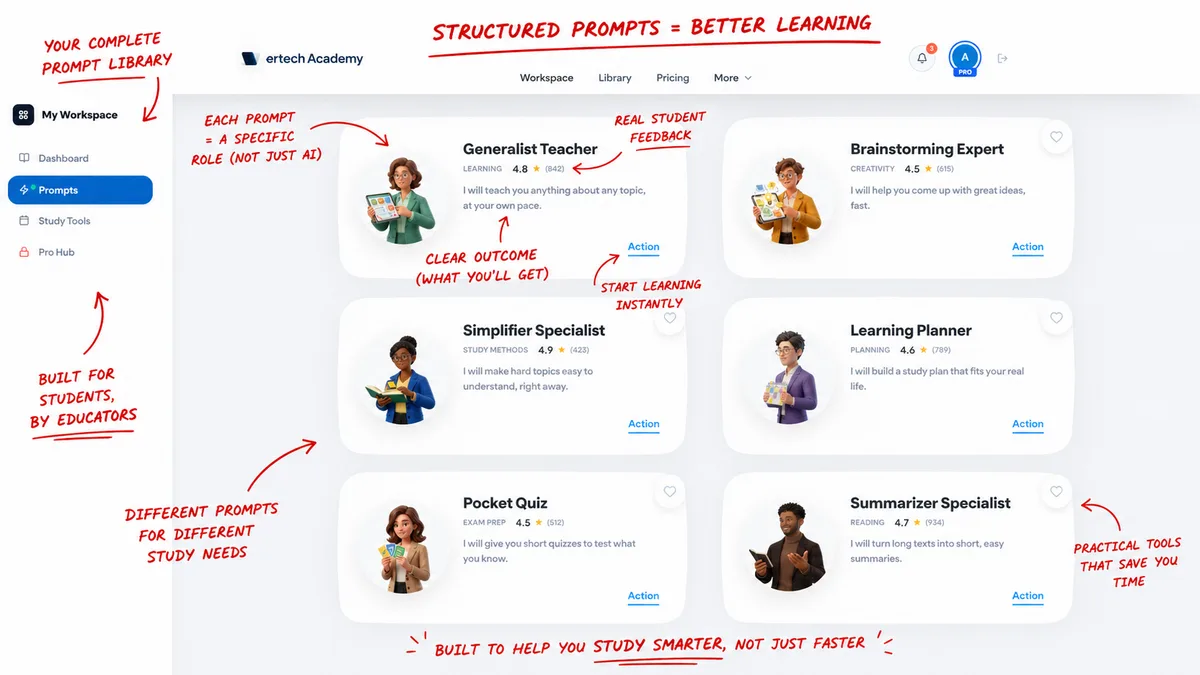
Live AI Teleprompter Cheating vs. 48-Hour Socratic Rehearsal
Why Applicants Get Rejected in 2026
- • Running a "live interview copilot" on a second screen and reading generic AI paragraphs while your eyes dart left and right.
- • Rambling for 3.5 minutes on a single question without ever stating a clear Result or personal takeaway.
- • Saying "We did this, we did that" on every group project story so the interviewer cannot grade your individual skill.
- • Ending the interview with "No, I think you answered all my questions!" (the fastest way to signal low interest).
How Top 5% Student Candidates Prep
- • Decoding the job description 48 hours early and mapping 5 authentic student experiences with Brainstorming Expert.
- • Structuring every story into a 90-second STAR-L arc where 50% of the time highlights your specific personal Actions.
- • Practicing 2nd-level probing follow-ups out loud with Critical Thinking Expert.
- • Keeping only 1 small sticky note with five 3-word story titles next to your webcam so your eye contact is 100% natural.
Rehearse Behavioral & Technical Interviews With Vertech Academy
Pair your interview prep with our AI student resume guide and AI presentation guide to dominate every stage of campus recruiting season.
Build Your STAR-L Story Bank & Run Live Mock Drills
Launch Brainstorming Expert to extract impressive STAR-L stories from your classes and part-time jobs, Critical Thinking Expert for tough mock interviews, or Coding Tutor for Socratic algorithm walkthroughs.
Your 3-Step Pre-Interview Checklist
Map 5 Real Projects Into 4-Bullet STAR-L Outlines
Use Brainstorming Expert to make sure 50% of every story focuses on your personal "I" actions.
Run 1 Out-Loud Mock Interview With 2nd-Level Follow-Ups
Never practice silently in your head. Speak your answers out loud to Critical Thinking Expert or ChatGPT Voice Mode.
Close All AI Windows & Put 1 Sticky Note Beside Your Webcam
Write 3-word titles for your 5 stories + 2 questions for the interviewer on a sticky note right next to your camera lens.
Final Verdict: Preparation Builds Confidence; Live Scripts Destroy Trust
Interviewers Do Not Hire Perfect Robots; They Hire Curious Teammates They Can Trust.
Every recruiting season, students worry that they do not have prestigious enough internships on their resume. Here is the secret from the other side of the hiring table: a student who can clearly, enthusiastically explain how they debugged a messy class project or solved a real problem at a summer job will beat a candidate reciting buzzwords off a hidden AI screen 10 times out of 10. Use AI to organize your real stories and practice out loud, then show up on camera as yourself.

Related Study Resources & Free AI Tools
- Step-by-Step Hub Guide: How to Study with AI: The Complete 2026 Student Guide
- Science-Backed Study Method: Active Recall & Self-Quizzing Method (Step-by-Step)
- 24/7 Interactive AI Tutor: Practice with Brainstorming Expert
- Free Prompt Engineering Course: S-Tier AI Prompt Writing for Students (28 Free Lessons)