

Reading without a strategy is just moving your eyes across a page. Encoding requires effort, not repetition. You read 40 pages and remember nothing. Here is how to change the way you read so the material actually sticks.
What are you trying to solve right now?
Pick your bottleneck to compare 2026 pricing caps, free student promos, or test our matched AI coach.
Claim free student promos first—never stack two $20/mo chatbots.
Verify your .edu email for Google AI Pro (12 months free) or Perplexity Education ($10/mo), then pair it with our Socratic study prompts so AI quizzes you instead of writing generic summaries.
Compare Deep-Dive Guides (Save $15–$20/mo):
Reading a textbook chapter three times and retaining almost none of it is not a memory problem. It is a strategy problem. Most students read passively - eyes move across the page, highlighter touches the paper, but the brain never engages with the material deeply enough to store it.
The fix is not reading more. It is reading differently. Active reading strategies force your brain to process information at a deeper level, which is what actually creates durable memory. Here is exactly how to do it.
Why You Forget Everything You Read
Your brain does not store information just because your eyes saw it. Memory requires encoding - the process of connecting new information to things you already know. Passive reading (highlighting, re-reading, copying notes word-for-word) skips this step entirely.
Think about the last conversation you had with a friend. You remember it because you were actively participating - responding, thinking, reacting. Reading needs to work the same way.
The Active Reading Framework That Actually Works
Preview before you read - scan all the headings, bolded terms, and diagrams in the chapter first. This gives your brain a skeleton to attach new information to. Five minutes of previewing saves thirty minutes of confused re-reading.
Read one section at a time, then close the book - after each section, look away and try to explain what you just read in your own words. If you cannot, re-read that section only.
Ask questions as you go - turn each heading into a question. “What is mitosis?” becomes your guiding question for that section. Read to answer it, not just to finish the page.
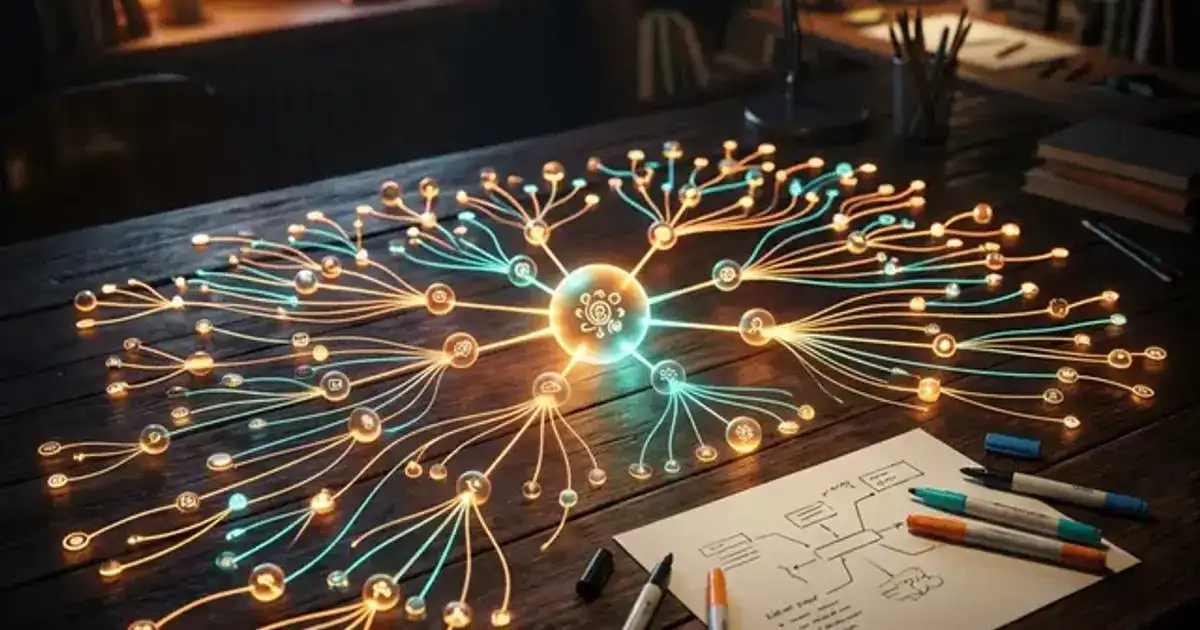
Connect, do not just collect - after reading, draw connections between what you just learned and what you knew before. How does this concept relate to last week's lecture? Where does it disagree with something else you learned?
Three Things to Stop Doing Immediately
Highlighting everything
If everything is highlighted, nothing is highlighted. Highlighting gives you the illusion of learning without any actual encoding.
Re-reading entire chapters
Re-reading is one of the least effective study methods according to cognitive science research. Test yourself instead.
Reading without purpose
Sitting down with “I need to read chapter 5” is not a goal. “I need to understand the three types of cell division” is a goal.
How AI Fits Into Active Reading
AI is perfect for the “test yourself” and “explain it back” steps. After reading a section, paste your notes into ChatGPT and ask it to quiz you. If you can answer the questions without looking back, the material is encoded. If you cannot, you know exactly where the gap is.
You can also use AI to generate a pre-reading summary - a quick overview of the chapter before you start. This gives your brain the preview scaffold that makes the full reading more efficient.
If you want a structured approach to turning your reading into study material, check out our guide on turning messy notes into a clean study guide using AI. For the AI quizzing step, the Chemistry Tutor prompt handles this well.
Related Study Resources & Free AI Tools
- Step-by-Step Hub Guide: How to Use Google NotebookLM for Textbooks & Lecture Notes
- Science-Backed Study Method: The SQ3R Textbook Reading Method
- 24/7 Interactive AI Tutor: Practice with Generalist Teacher
- Free Prompt Engineering Course: S-Tier AI Prompt Writing for Students (28 Free Lessons)