Introduction
If you have spent any time in a classroom, you have likely heard of the Cornell Note-Taking System. Developed at Cornell University in the 1940s, this method divided a page into three sections: cues, notes, and a summary. For decades, it was considered the gold standard for students. However, the academic world has changed drastically since the mid-20th century. Lectures are faster, information is denser, and students are expected to process massive amounts of data in real-time. This is why many are now searching for a modern Cornell notes alternative.
The traditional Cornell method often forces students to focus more on the layout of the page than the content of the lecture. When you are busy drawing lines and keeping columns straight, you might miss the subtle nuances of a complex argument. Furthermore, the manual summary section at the bottom of the page often becomes a repetitive chore rather than a learning tool. To truly excel in high-level courses, you need a active recall system that works with digital tools, not against them.
In this guide, we will explore why the old ways are failing and introduce a high-performance better note taking method. We will discuss how to implement an AI note system that automates the organization while keeping you mentally engaged. By shifting your college notes strategy, you can save hours of revision time and actually understand the material. At Vertech Academy, we believe that your notes should be a conversation with the material, not just a static record on a page. Let’s look at the best Cornell notes alternative for the digital age.
Why the Cornell Method Struggles with Modern Information
The Cornell method was designed for a slower era of education. In the 1940s, a professor might lecture from a single textbook for an hour. Today, a single lecture might involve PowerPoint slides, YouTube clips, live coding, and external research papers. The rigid structure of the Cornell page simply cannot keep up with this multi-modal stream of data. Therefore, the search for a Cornell notes alternative is a practical necessity for survival in modern university life.
One major issue is the "summary trap." The Cornell method asks you to summarize your notes at the bottom of the page. While this sounds good in theory, research in the Scientific American suggests that manual summarization is often passive. Students frequently just reword their existing notes without actually testing their understanding. A better note taking method should force you to retrieve information from your memory, not just rearrange words you already wrote down.
Additionally, the physical space constraints are a problem. If a professor spends thirty minutes on a single complex diagram, the "cue" column becomes wasted space. Conversely, if they fire off twenty key terms in five minutes, that column overflows. This lack of flexibility makes the Cornell system a poor college notes strategy for technical subjects like STEM or medicine. You need an AI note system that can expand and contract based on the density of the information being shared.
The Problem of Cognitive Load
When you use an outdated system, you increase your cognitive load. Cognitive load is the total amount of mental effort being used in the working memory. We can express the total cognitive load ($CL$) as:
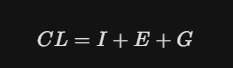
Where "I" is intrinsic load (the difficulty of the subject), $E$ is extraneous load (the difficulty of the note-taking method), and $G$ is germane load (the actual learning). If your Cornell notes alternative reduces $E$, you have more room for "G". The Cornell method, unfortunately, adds a high amount of $E$ because you are constantly managing the page layout.
Searching for a Better Note Taking Method
So, what makes a better note taking method? It must be flexible, digital-friendly, and focused on output rather than just input. Many students have tried moving to "Outline" methods or "Mind Mapping." While these are improvements, they still rely on the student to do all the heavy lifting of organization during the lecture. This is why a modern Cornell notes alternative should involve a partnership between the student and a digital assistant.
A successful college notes strategy in the current era must prioritize "meaning-making." This means you shouldn't just record what was said; you should record what you think about what was said. High-quality apps like Notion or Goodnotes allow for this, but they still require a structured approach to be effective. Without a system, a digital notebook can quickly become a graveyard of unorganized thoughts.
This is where the concept of an AI note system comes into play. Instead of worrying about where a cue goes or how to format a summary, you focus on capturing raw, high-quality insights. You let the technology handle the "extraneous load" of formatting. This allows you to stay in a "flow state" during class. By choosing a Cornell notes alternative that leverages automation, you ensure that your study time is spent on understanding, not housekeeping.
Introducing the AI Note System
The AI note system is a workflow that combines rapid capture with intelligent refining. Unlike the Cornell method, it doesn't happen on a single piece of paper. Instead, it is a multi-step process that turns raw information into a polished study tool. This better note taking method allows you to be an active listener during the lecture while still ending up with perfectly organized materials.
At the heart of this system is the Notes Organizer. Rather than following a strict column-based layout, you simply take "flow notes"—bullet points that capture the main ideas and connections. After class, you feed these raw notes into the AI. The system then categorizes the data, identifies key terms, and creates a logical hierarchy that is much more useful than a manual Cornell summary.
This is a superior college notes strategy because it allows for "post-class reflection." In the old Cornell system, you were supposed to reflect while you were still tired from the lecture. In an AI note system, the machine provides a structured draft of your notes, which you then review and edit. This second pass over the material is where the real learning happens. It is the ultimate Cornell notes alternative because it bridges the gap between raw data and usable knowledge.
Step 1: Rapid Capture and Knowledge Categorization
To start using this Cornell notes alternative, you need to change how you behave in class. Stop trying to make your notes look perfect. Your goal during the lecture is "Rapid Capture." Use a simple digital document or a fast-syncing app like Evernote. Focus on keywords, relationships, and "aha!" moments. This is the foundation of a modern better note taking method.
Once the lecture is over, your raw notes might look like a mess. That is okay! In an AI note system, the mess is the fuel. You take that unorganized text and provide it to a categorization prompt. The AI will then:
Separate definitions from examples.
Group related concepts that the professor might have discussed at different times.
Highlight "orphan ideas" that need more research.
This college notes strategy ensures that you don't lose the forest for the trees. By automating the categorization, you can see the big picture of the lecture immediately. This is far more effective than the Cornell method's cue column, which often only captures isolated words. When you use this Cornell notes alternative, you are building a database of knowledge, not just a pile of papers.
Step 2: Interactive Refining with the Active Listener
The most powerful part of this better note taking method is the refining stage. Once the AI has organized your notes, you should use the Active Listener to test your knowledge. This is a conversational tool that reads your notes and asks you challenging questions about them. It turns your notes into an interactive tutor.
This is the "secret sauce" of a successful AI note system. While the Cornell method asks you to write a summary, the Active Listener asks you to explain the summary. For example, if your notes mention "Photosynthesis," the AI might ask, "How would the process change if the light intensity was halved?" This forces you to think critically, which is a much more effective college notes strategy for long-term retention.
Upload your organized notes to the Active Listener.
Engage in a 5-minute dialogue about the key concepts.
Ask the AI to identify any contradictions in your notes.
Update your "Master Note" based on the insights from this conversation.
By using this Cornell notes alternative, you are essentially performing a high-speed review session every time you take notes. You aren't just storing information; you are practicing it. This is why an AI note system is so much more effective for difficult subjects where understanding the "why" is more important than just knowing the "what."
Why This College Notes Strategy Saves Time
You might think that adding an AI step takes more time, but the opposite is true. This college notes strategy is designed for efficiency. Traditional Cornell note-taking requires you to spend hours manually rewriting and summarizing. With a Cornell notes alternative based on AI, the "busy work" is handled in seconds. This leaves you with more time for actual studying and personal life.
Furthermore, an AI note system creates materials that are searchable and taggable. If you need to find a specific mention of "Mitosis" from three weeks ago, you can find it in an instant. This is a better note taking method for exam prep because it allows you to build a cumulative knowledge base. You can see how ideas from Week 1 connect to Week 10 without flipping through a hundred physical pages.
Finally, consider the reduction in stress. When you know you have a reliable Cornell notes alternative waiting for you after class, you don't have to panic if you miss a single word. You can focus on the professor's explanation, knowing that your college notes strategy has a safety net. This leads to better mental health and a more positive relationship with your education.
Conclusion
The Cornell method served students well for many years, but it is time to move forward. As we have discussed, a modern Cornell notes alternative must be digital, flexible, and interactive. By adopting a better note taking method that utilizes an AI note system, you are giving yourself a massive competitive advantage. You are moving away from passive record-keeping and toward active, meaningful learning.
At Vertech Academy, we encourage you to use our Notes Organizer and Active Listener to build this workflow. Remember to always maintain your academic integrity checklist and use AI as a tool for understanding, not a way to skip the thinking process. Your notes should be a reflection of your growing expertise.
Switching your college notes strategy might feel strange at first, but the results will speak for themselves. You will find that you remember more, stress less, and enjoy your classes more. The era of the three-column page is over. The era of the intelligent, conversational note system is here. Take the leap, try this new method, and watch your academic performance reach new heights.
FAQ
Why is Cornell note-taking considered "outdated" now?
The Cornell method was created for a time when information moved much slower. In today's high-speed academic environment, the rigid layout often adds "extraneous cognitive load," making it a less effective college notes strategy. Modern students need a Cornell notes alternative that can handle multi-modal data and integrate with digital search tools.
What is the best digital app for a Cornell notes alternative?
While many students use Notion or Goodnotes, the best better note taking method involves combining a capture app with an AI note system. By using tools like Vertech Academy's prompts, you can turn raw text from any app into a structured, categorized study guide automatically.
Does an AI note system promote cheating?
Not at all. When used correctly, an AI note system is a powerful study aid. It helps you organize your own thoughts and identifies gaps in your knowledge. As long as you are the one engaging with the material and using the AI for "active recall," you are following a high-integrity college notes strategy. Always check your school's specific AI policy for guidance.
How do I switch from Cornell notes to an AI system?
Start by stopping the manual column drawing. Focus on capturing bullet points and questions during class. After the lecture, use a Cornell notes alternative prompt to organize those points. Then, use an Active Listener to test yourself on the material. This 3-step process is a much more efficient better note taking method.
Can I use this strategy for math and science classes?
Yes! In fact, an AI note system is perfect for STEM. You can use LaTeX for formulas and ask the AI to explain the logic between steps. It is a far superior Cornell notes alternative for technical subjects because it doesn't limit your space for complex diagrams or long equations.
You might also like: