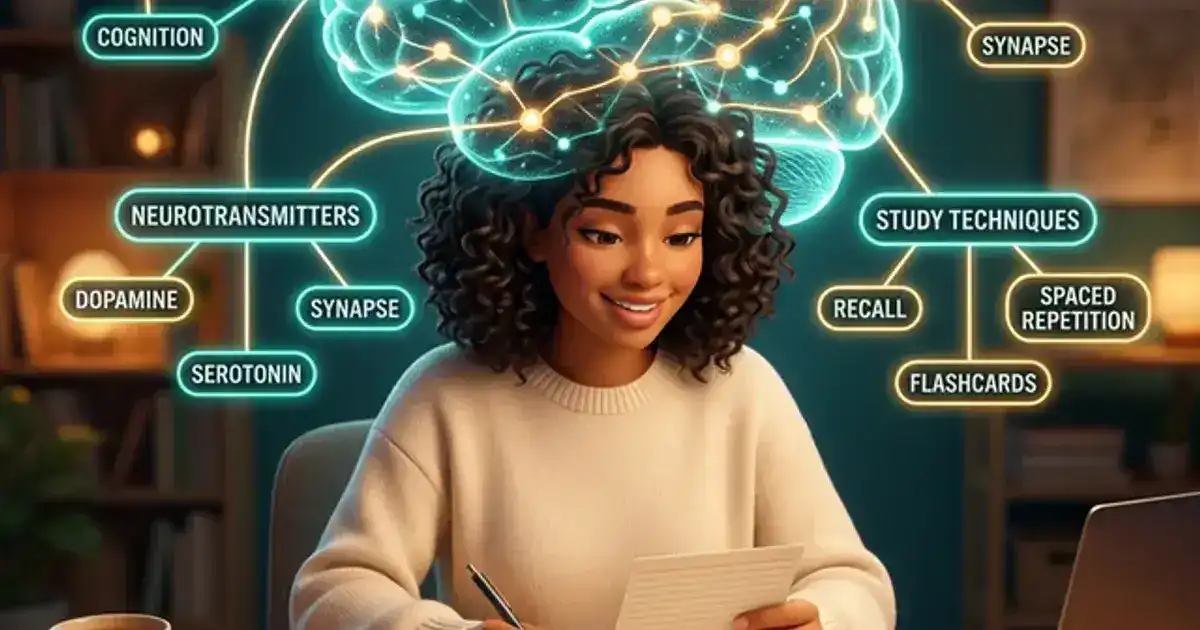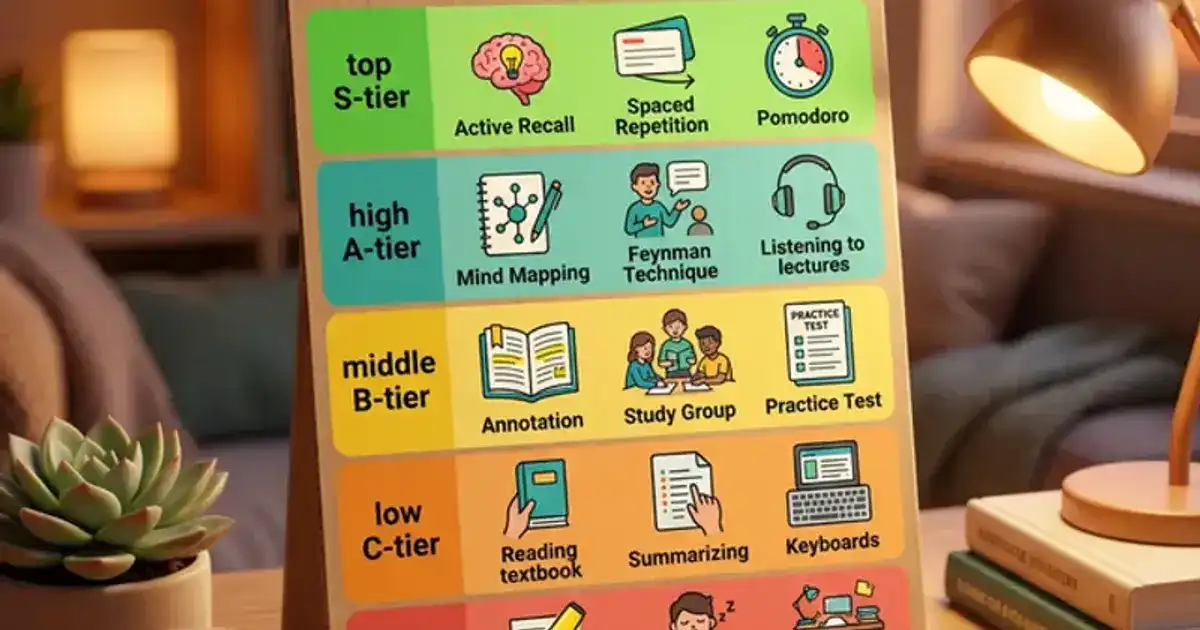


Active recall and spaced repetition are the two highest-ROI study techniques. AI makes them effortless to implement. The two most effective study techniques in cognitive science, supercharged by AI. Here is exactly how to set it up.
What are you trying to solve right now?
Pick your bottleneck to compare 2026 pricing caps, free student promos, or test our matched AI coach.
Claim free student promos first—never stack two $20/mo chatbots.
Verify your .edu email for Google AI Pro (12 months free) or Perplexity Education ($10/mo), then pair it with our Socratic study prompts so AI quizzes you instead of writing generic summaries.
Compare Deep-Dive Guides (Save $15–$20/mo):
Active recall and spaced repetition are not new ideas. They have been backed by decades of cognitive science research as the two most effective ways to move information from short-term memory into long-term memory. The problem was always that they take effort to set up.
AI eliminates that setup barrier completely. You can now generate recall questions, build spaced schedules, and test yourself on any material in minutes. Here is the exact workflow.
Active Recall: The Single Best Study Technique
Active recall means testing yourself instead of rereading. Every time you force your brain to retrieve information, you strengthen the neural pathway for that memory. Rereading does the opposite - it creates a feeling of familiarity without actual retrieval strength.
The Active Recall Prompt
“Here are my notes on [topic]: [paste notes]. Generate 15 retrieval practice questions that test understanding, not just memorization. Include a mix of definition questions, application questions, and ‘why' questions. Do not show me the answers until I attempt each one.”
The key is “do not show me the answers.” This forces your brain to actually retrieve the information rather than passively recognizing it.
Spaced Repetition: When to Review What
Studying the same material three times in one night is less effective than studying it once across three different days. This is the spacing effect - your brain consolidates memories better when review sessions are spread out over time.
Day 1
Learn the material and take your first recall test. Mark what you got wrong.
Day 3
Review only what you got wrong. Test yourself again. The gaps start closing.
Day 7
Final review of everything. By now, 80-90% should be locked in long-term memory.
The Complete AI-Powered Workflow
Paste your notes into AI - after class, dump your lecture notes into ChatGPT or Claude and ask it to generate recall questions.
Test yourself immediately - try to answer each question from memory. Grade yourself honestly.
Ask AI to create a spaced review schedule - tell it your exam date and ask it to build a review calendar with the optimal spacing.
On review days, retest yourself - ask AI to quiz you again, but only on the topics you previously got wrong.
The compound effect
Students who combine active recall with spaced repetition consistently outperform students who study for longer hours using passive methods. It is not about how long you study - it is about how you study.
Our Chemistry Tutor prompt has built-in testing and check-your-understanding features that are perfect for active recall sessions. Also see our guide on how to use ChatGPT to study.
Related Study Resources & Free AI Tools
- Step-by-Step Hub Guide: Anki & Spaced Repetition: The Complete Student Setup Guide
- Science-Backed Study Method: The Leitner Flashcard System for Long-Term Retention
- 24/7 Interactive AI Tutor: Practice with Generalist Teacher
- Free Prompt Engineering Course: S-Tier AI Prompt Writing for Students (28 Free Lessons)