Introduction: The "Textbook Fog"
You read the paragraph three times. You know the words are English, but they might as well be Martian.
Academic textbooks are famous for being dense, boring, and overly complicated. They use ten big words when three small ones would do. This "Textbook Fog" is a major reason students get stuck.
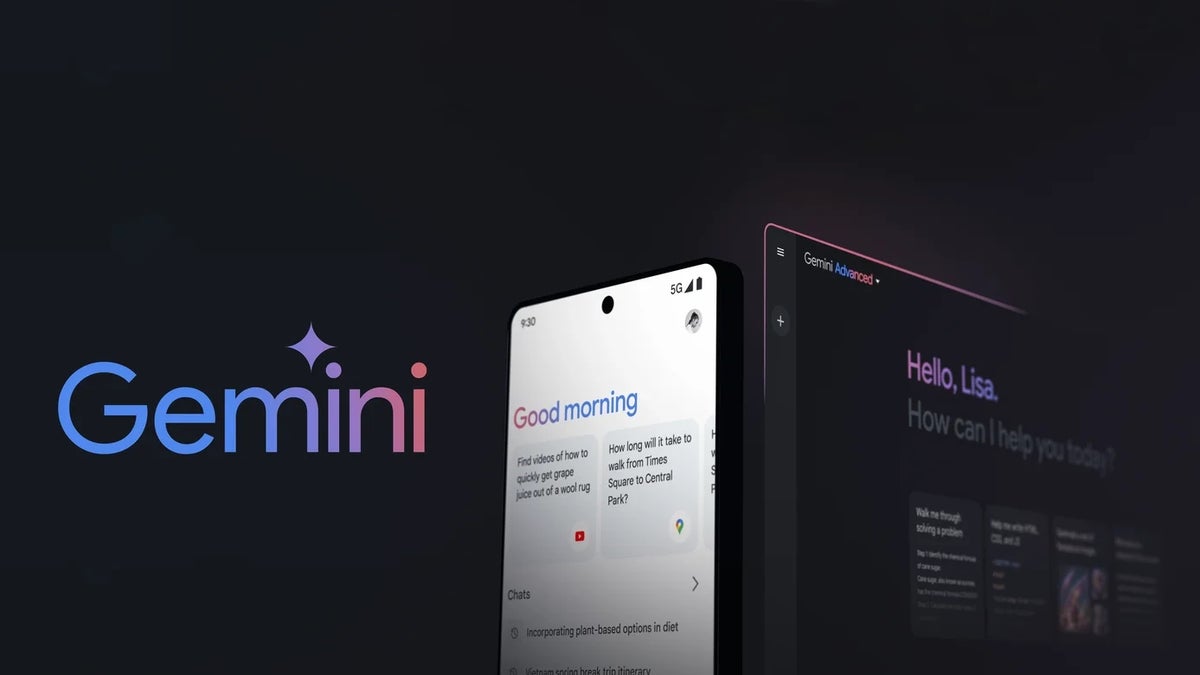
Google Gemini is the perfect fog light.
Because it is connected to the live internet and powered by Google's massive knowledge base, Gemini is exceptionally good at "translation"—not just between languages, but between levels of complexity.
Here is how to use Gemini to turn your confusing homework into something you actually understand.
1. The "ELI5" Prompt (Explain Like I'm 5)
This is the classic "break glass in case of emergency" prompt. When a concept makes zero sense, ask Gemini to treat you like a kindergartner.
The Prompt:
"I am struggling to understand 'The Great Depression.' Explain it to me like I am 5 years old. Use simple words and short sentences."
Why it works: It forces the AI to strip away all the nuance and focus only on the core story. Once you get the "kiddy version," you can go back to the textbook and fill in the details.
2. The "Analogy" Prompt (Connect to What You Know)
Abstract concepts (like "osmosis" or "supply and demand") are hard because you can't see them. Analogies fix this by connecting the new concept to something you already know.
The Prompt:
"I don't understand how a 'computer virus' works. Can you explain it using an analogy about a biological virus or a house guest?"
Why it works: Gemini excels at creative comparisons. It might explain that a computer virus is like a "Trojan Horse" that sneaks into your castle (computer) pretending to be a gift (a free game).
3. The "Jargon Buster" Prompt
Sometimes you understand the concept, but the vocabulary is killing you.
The Prompt:
"I am pasting a paragraph from my biology textbook below. Please rewrite it in plain English. Keep the meaning the same, but replace the jargon with everyday words."
Example:
Original: "The mitochondria facilitates cellular respiration to generate ATP."
Gemini: "The mitochondria acts like a power plant. It turns food into energy the cell can use."
This helps you build a "translation dictionary" in your head.
4. The "Socratic" Breakdown (Google's Specialty)
Google's education tools are designed to guide you, not just answer you. You can ask Gemini to act as a Socratic Tutor.
The Prompt:
"I am trying to solve this math problem but I'm stuck. Don't give me the answer. Instead, ask me a guiding question that will help me figure out the next step."
This turns passive reading into active problem-solving. It builds the neural pathways you need to solve the problem on the test, where Gemini won't be there to help you.
5. The "Double-Check" Verification
Since Gemini is an AI, it can sometimes oversimplify to the point of being wrong. Always use the Double-Check feature.
After Gemini gives you a simplified explanation, click the "G" icon below the response. It will scan Google Search to verify that its simplified explanation is still factually accurate.
Conclusion: Translation is the Key to Mastery
You aren't "dumb" for not understanding the textbook. You just need a translator.
By using Gemini to simplify, analogize, and break down complex topics, you aren't cheating; you are making the material accessible. Once you understand the simple version, you will be surprised at how easy the complex version becomes.
Student Guide to Ethical Generative AI Use
A university guide that explains the limitations of AI (like hallucinations) and how to use it as a support tool rather than a replacement for scholarship.