Introduction: The "Illusion of Competence"
You’ve re-read your notes three times. You’ve highlighted the textbook. You feel ready. Then you sit down for the actual exam, read the first question, and panic. I don’t know this.
This is called the Illusion of Competence. Reading makes you familiar with the material, but it doesn't test your ability to retrieve it under pressure.
The only way to beat this is to take a practice test. But what if your teacher didn't give you one? You can build your own using AI. It takes 5 minutes, and it might just save your grade.
Step 1: Feed the AI Your Material (Context is King)
AI cannot quiz you on what it doesn't know. You need to give it the source material.
Paste your notes: Copy text from your digital notebook.
Paste the syllabus: This helps the AI know which topics are most important.
Upload a PDF: If you have a study guide, upload it directly (if using ChatGPT Plus or Claude).
The "Context" Prompt:
"I am going to paste my notes for my upcoming [Subject, e.g., AP Biology] exam below. Please read and analyze them. Do not generate anything yet. Just reply 'Read' when you are ready."
Step 2: Generate Multiple Choice Questions (The Warm-Up)
Start with multiple-choice questions to test your basic recall of facts and definitions.
The Prompt:
"Create a 15-question multiple-choice test based on these notes.
Make the questions difficult (not just simple definitions).
Include 4 options for each question (A, B, C, D).
Provide an Answer Key at the very bottom, hidden from view."
Pro Tip: If the questions are too easy, tell the AI: "Make the distractors (wrong answers) harder to distinguish from the correct answer."
Step 3: Generate "Application" Questions (The Real Test)
Most exams don't just ask "What is X?" They ask "How does X apply to Y?" You need short-answer questions to practice this.
The Prompt:
"Now create 5 short-answer questions that require me to apply the concepts.
Example: Instead of asking 'What is photosynthesis?', ask 'Predict what would happen to a plant if it were placed in a room with green light only.'"
Step 4: The "Simulation" Mode
Now, take the test.
Close your notes.
Set a timer for 20 minutes.
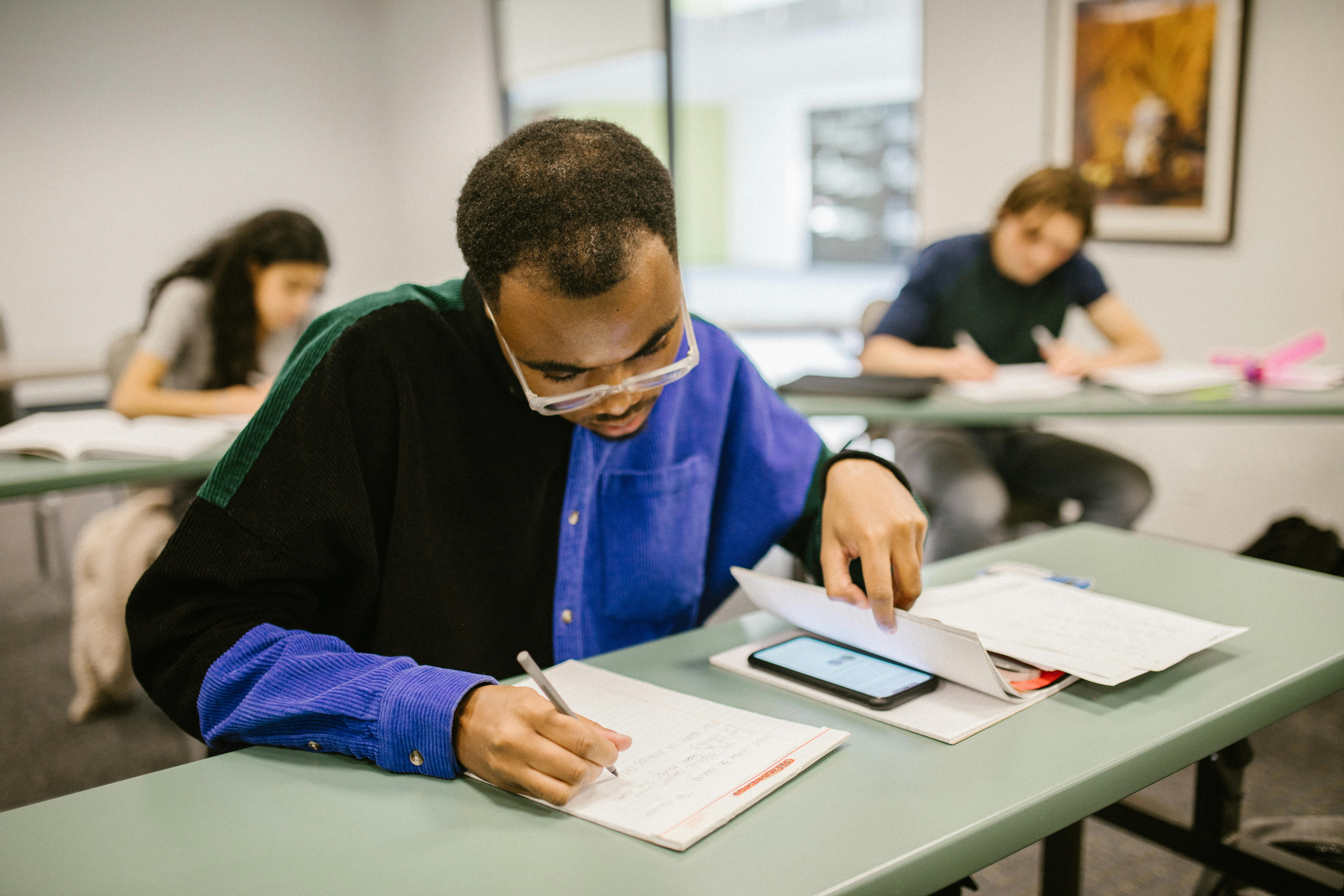
Write your answers on a physical piece of paper (this helps memory).
Why this works: You are simulating the stress of the exam room. If you get stuck, don't look at your notes immediately. Force your brain to struggle for the answer. This struggle is where learning happens.
Step 5: The "AI Grader" Loop
Once you are done, don't just check the answer key. Use AI to grade your short answers.
The Prompt:
"Here is the question: [Paste Question]. Here is my answer: [Paste Your Answer]. Grade my answer on a scale of 1-5. Tell me what I missed and how I could make it a perfect 5."
This gives you instant, personalized feedback that a textbook answer key never could.
Conclusion: Fail Here, Succeed There
The goal of a mock exam is to fail. You want to find out what you don't know now, while you are sitting in your bedroom, rather than later, when you are sitting in the exam hall.
Run this workflow two days before every big test. You will walk in with the confidence of someone who has already passed the exam.