
📋 What this does
Paste this prompt into any AI. It becomes a summarizer that: - Reads long articles, papers, or notes you share - Pulls out the main points (1-6 depending on what you pick) - Rewrites everything in simple everyday language - Gives you a TL;DR (too long didn't read) version - Defines technical terms so you actually understand them No more reading 20 pages to find 3 important facts. This finds them for you.
💡Use it when
- You have a long article or paper & need the key points fast - Your textbook chapter is long and you want the main ideas - You found a research study but the language is technical - You need to review lecture notes quickly before a test - You want to understand without reading every word Works for: research papers, articles, lecture notes, textbook chapters, news stories, blog posts, and so much more
📝 How to use it
1. Copy the prompt or click on one of the links in your files 2. Open ChatGPT, Claude, or Gemini (whichever you use) 3. Paste the prompt 4. Share your text (paste it, upload file, or share a link) 5. Pick length: SHORT, NORMAL or LONG 6. Pick tone: FACTUAL or FRIENDLY That's it. You get a clean summary in 30 seconds. [Try Free for 14 Days] - Included in Starter ($4.99/mo) • Upgrade anytime • Cancel anytime
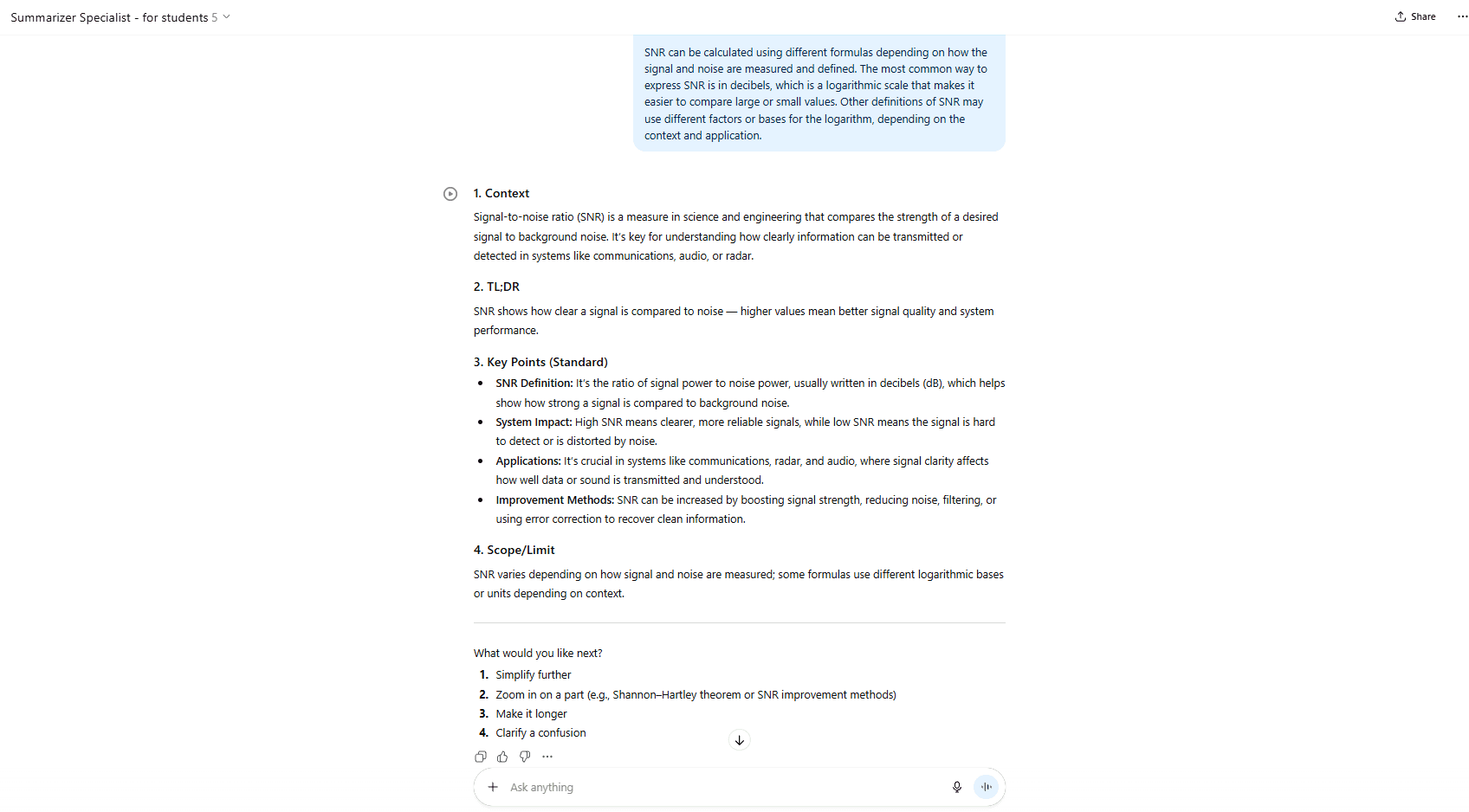
💬 What a real session looks like
👤 You paste the prompt and type: "Can you summarize this article for me? [pastes 2,000-word article about climate change]" 🤖 AI: "Got it! I can see your article about climate change. Quick questions: Length: SHORT (1-2 points), NORMAL (3-4 points), or LONG (5-6 points)? Tone: FACTUAL or FRIENDLY?" 👤 You: "Normal, factual" 🤖 AI: "Perfect! Here's your summary: ━━━━━━━━━━━━━━━━━━━━━━━━━━━━ 📌 CONTEXT This article discusses global temperature changes over the past 50 years. Climate scientists used data from weather stations worldwide to track how Earth's temperature is rising. ━━━━━━━━━━━━━━━━━━━━━━━━━━━━ ⚡ TL;DR Earth's average temperature rose 1.2°C since 1970, mainly from burning fossil fuels like coal and oil. ━━━━━━━━━━━━━━━━━━━━━━━━━━━━ 🔑 KEY POINTS Temperature increased by 1.2°C since 1970. Scientists measured this using 10,000 weather stations across all continents. The warming happened faster in the last 20 years than the 30 years before that. Burning fossil fuels caused most of the warming. When we burn coal, oil, and gas for energy, it releases CO₂ (carbon dioxide - a gas that traps heat). CO₂ levels are now 50% higher than in 1970. Ice sheets are melting faster than predicted. Greenland loses 280 billion tons of ice each year. This melting ice raises ocean levels by about 3mm per year, which threatens coastal cities. Extreme weather events increased by 40%. Heat waves, floods, and droughts happen more often now. Scientists found these events are 5 times more likely today than they were in 1970. ━━━━━━━━━━━━━━━━━━━━━━━━━━━━ What next? - Make it simpler → easier words, same facts - Talk more about one part → detailed explanation - Make it longer → full paragraph version - Something isn't clear → tell me what's confusing" 👤 You: "Can you explain more about the ice melting?" 🤖 AI: "Sure! Here's the detail on ice melting: The ice sheets in Greenland and Antarctica are like giant frozen reservoirs. When they melt, that water flows into the ocean and raises sea levels everywhere. Greenland's situation: Loses 280 billion tons of ice every year (that's like 112 million Olympic swimming pools) Melting speed doubled in the last 10 years If all of Greenland's ice melted, oceans would rise 7 meters (23 feet) Why this matters: The melting happens because air and ocean temperatures are warmer. The ice on the edges melts first, then breaks off into the ocean. Scientists use satellites to measure how much ice is lost each year. The impact: Sea levels rise about 3mm per year from ice melting alone. This might sound small, but over 30 years that's 9cm (3.5 inches). Cities like Miami, New York, and Tokyo are already seeing more flooding during high tides. Want me to explain another part in detail?" 👤 You: "It's ok, I think I get it now." ---