

Jump to section (7)
- 1.Copy-Paste AI Citation Templates: APA 7th, MLA 9th & Chicago 18th
- 2.Workflow #1: Generate Your Exact APA 7, MLA 9, or Chicago AI Citation
- 3.Workflow #2: The Copy-Paste "AI Methodology & Disclosure Statement"
- 4.Workflow #3: How to Replace an "AI Fact" With a Real Peer-Reviewed Citation
- 5.Research & Cite With Confidence Inside Vertech Academy
- 6.Final Verdict: Transparency Is Your Best Shield in College
- 7.Frequently Asked Questions
Never cite ChatGPT, Claude, or Gemini as a primary factual source (the way you cite a peer-reviewed journal article). Instead: 1) Cite the underlying peer-reviewed paper for every factual claim, 2) Cite the AI model in APA/MLA/Chicago only when quoting or reproducing AI-generated text, tables, or code, and 3) Include a 3-sentence 'AI Methodology & Disclosure Note' at the end of your paper.
What are you trying to solve right now?
Pick your bottleneck to compare 2026 pricing caps, free student promos, or test our matched AI coach.
Claim free student promos first—never stack two $20/mo chatbots.
Verify your .edu email for Google AI Pro (12 months free) or Perplexity Education ($10/mo), then pair it with our Socratic study prompts so AI quizzes you instead of writing generic summaries.
Compare Deep-Dive Guides (Save $15–$20/mo):
Here is the #1 mistake that gets well-meaning college students docked a full letter grade when citing AI: they drop (OpenAI, 2026) at the end of a factual sentence about cellular biology or macroeconomics, treating ChatGPT as if it were a peer-reviewed journal article. Every major university and style guide (APA, MLA, and Chicago) strictly forbids citing an AI chatbot as a factual authority.
Instead, proper academic AI citation in 2026 follows a simple two-part rule: cite original peer-reviewed papers for all facts, and cite or disclose AI (ChatGPT, Claude, Gemini, or Vertech's Brainstorming Expert & Research Assistant) as a methodological tool or when directly quoting AI output. Below are the exact copy-paste APA 7th, MLA 9th, and Chicago 18th templates plus a bulletproof AI Disclosure Statement.
6 Rules for Citing & Disclosing AI Without Losing Points
-
 Vertech Research AssistantFormats APA, MLA & Chicago references + AI disclosure notes
-
 APA 7th Edition FormatCredits the company as author (e.g., OpenAI, Anthropic, Google)
-
 MLA 9th Edition FormatStarts with the exact prompt text in quotes (no human author)
-
 Chicago 18th Style FormatCites AI in numbered footnotes or in-text, not the Bibliography
-
 Primary Source TracingAlways cite the peer-reviewed DOI paper for facts, never the bot
-
📋3-Sentence AI Disclosure NoteTransparent appendix showing how you used AI to brainstorm or edit

Copy-Paste AI Citation Templates: APA 7th, MLA 9th & Chicago 18th
Here are the official 2026 citation formats for ChatGPT, Claude, and Gemini across the three major academic style guides (see also our best free citation generators for students):
How to Cite ChatGPT, Claude & Gemini in APA, MLA, and Chicago Style
| Style Guide | Who Is Listed as Author? | In-Text / Footnote Citation | Full Reference / Works Cited Entry |
|---|---|---|---|
| 1. APA 7th Edition (Sciences & Psych) | Model Creator (OpenAI, Anthropic, Google) | (OpenAI, 2026) or (Anthropic, 2026) | OpenAI. (2026). ChatGPT (GPT-5 version) [Large language model]. https://chatgpt.com/ |
| 2. MLA 9th Edition (Humanities & English) | No Author (Starts with Prompt Title) | ("Explain the Symbolism") | "Explain the symbolism of the green light" prompt. ChatGPT, version GPT-5, OpenAI, 14 Oct. 2026, chatgpt.com/. |
| 3. Chicago 18th (Notes & Bibliography) | Model Name in Footnote Only | 1. Text generated by ChatGPT, OpenAI, October 14, 2026, https://chatgpt.com/. | Do NOT list in final Bibliography unless you share a public chat link |
| 4. IEEE Style (Engineering & CS) | Company + Model Name | [1] | [1] OpenAI, ChatGPT (GPT-5). San Francisco, CA, USA, 2026. Available: https://chatgpt.com/ |
If AI tells you a statistic, find and cite the original study
Never write: "Sleep deprivation lowers GPA by 0.4 points (OpenAI, 2026)." Use Research Assistant or Google Scholar to verify the real peer-reviewed study and cite that journal article.
Use formal APA/MLA citations when analyzing AI text or code
You only use a formal parenthetical citation like (OpenAI, 2026) when your paper directly quotes a response generated by the AI, reproduces an AI-generated table, or includes AI-assisted code snippets.
How to credit brainstorming, outlining, or rubric checks
When you use our Brainstorming Expert or Essay Writing Coach to outline ideas or check rubric alignment, disclose that in a short 3-sentence note at the end of your Works Cited page.
Why APA treats AI chats differently from personal emails
Because your professor cannot log into your private account to see your chat, APA 7th recommends pasting important prompt transcripts into an Appendix at the back of your paper alongside your Google Docs Version History.
Workflow #1: Generate Your Exact APA 7, MLA 9, or Chicago AI Citation
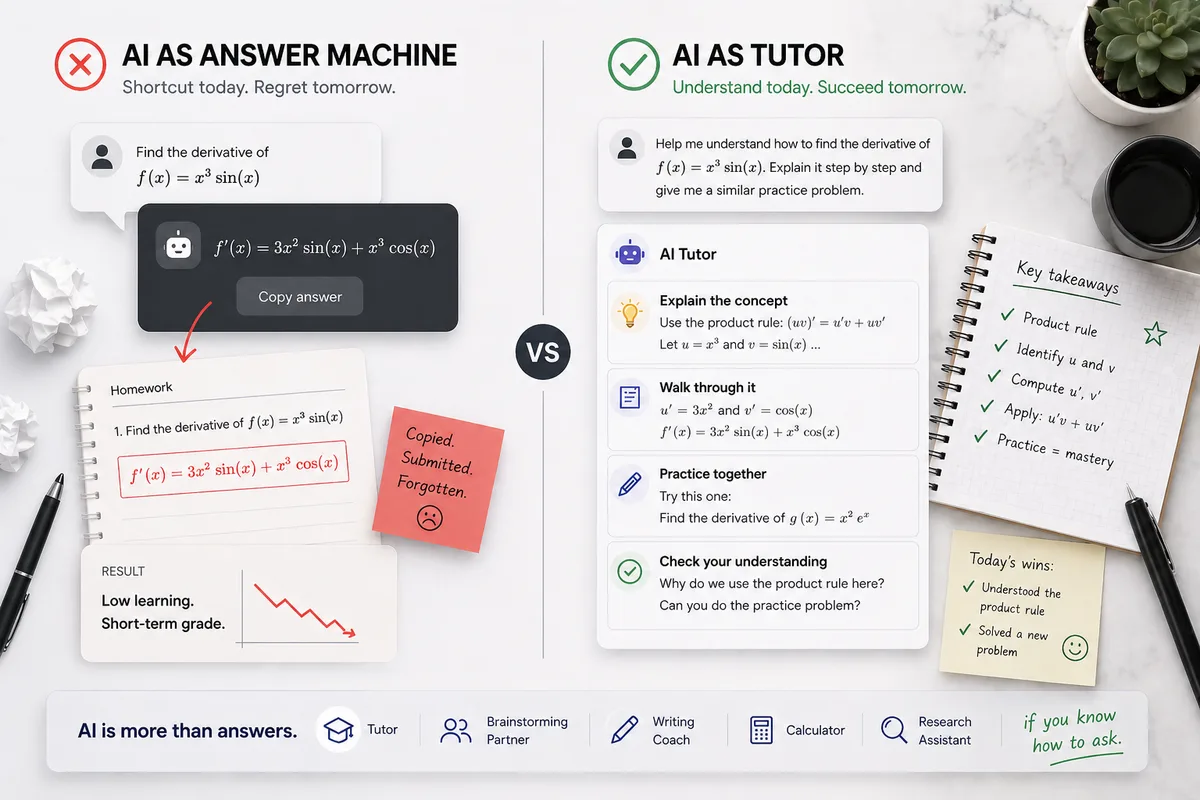
Not sure how to format the exact version name of Claude 3.7 Sonnet, Gemini 2.5 Pro, or ChatGPT in your bibliography? Launch our Research Assistant and paste Prompt #1 to get your exact in-text and bibliography entries in 5 seconds:
Workflow #2: The Copy-Paste "AI Methodology & Disclosure Statement"
In 2026, most professors prefer a clean "AI Disclosure Statement" placed right below your Works Cited / References list when you used AI ethically for brainstorming, outlining, or rubric auditing (see our guide on writing research papers with AI without plagiarizing). Use Prompt #2 with our Brainstorming Expert or Essay Writing Coach to generate a custom disclosure statement that proves your academic honesty:
Workflow #3: How to Replace an "AI Fact" With a Real Peer-Reviewed Citation
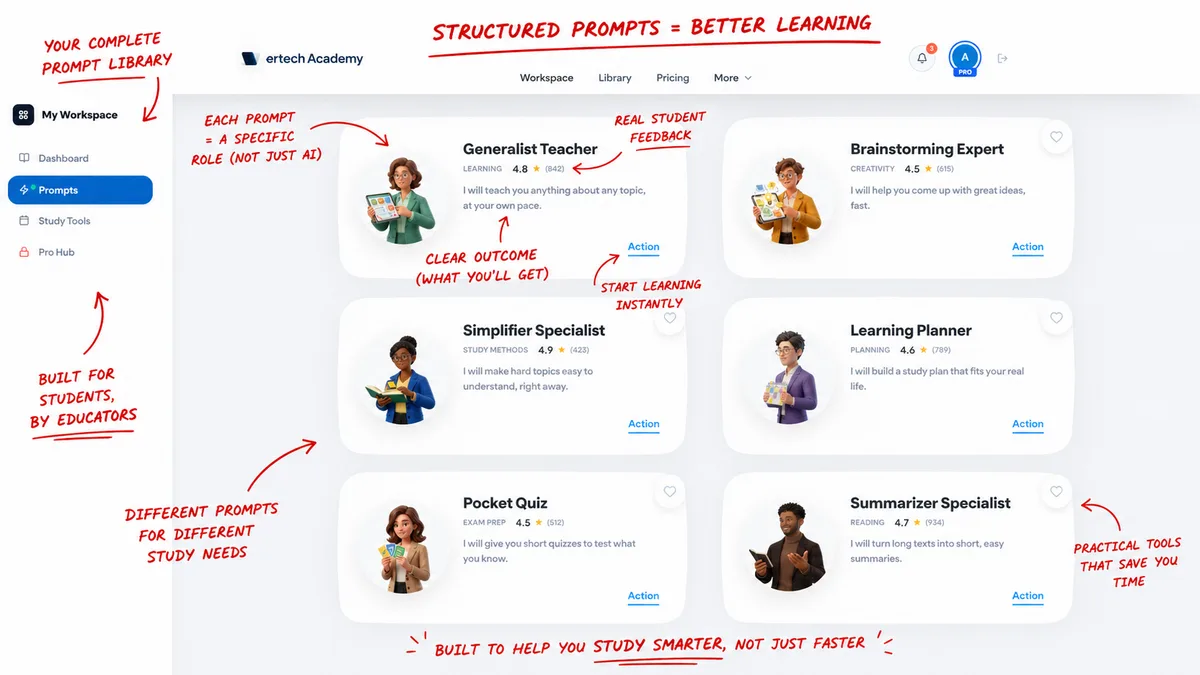
What if ChatGPT or Claude explained a concept or historical event during your brainstorming session and you want to include that point in your essay? Do not cite ChatGPT for the fact. Instead, use Prompt #3 inside our Research Assistant (alongside Google Scholar or Semantic Scholar) to locate the original peer-reviewed journal article and verify the DOI:
Amateur AI Citation Mistakes vs. A+ Academic Attribution
What Gets Students Docked Points
-
•
Citing
(OpenAI, 2026)for a scientific statistic or historical event instead of citing a peer-reviewed journal paper. - • Asking ChatGPT to "generate 5 APA citations with DOIs" and pasting fake, hallucinated journal articles into your bibliography.
- • Hiding legitimate AI brainstorming or outlining when the course syllabus explicitly asks for a 2-sentence AI disclosure note.
- • Listing "ChatGPT" as a human author in MLA 9th edition (MLA starts with the prompt title in quotation marks, not an author).
The Professor-Approved Citation System
- • Tracing every factual claim back to a real DOI paper via Google Scholar and Vertech Research Assistant.
- • Using exact APA 7th, MLA 9th, or Chicago 18th templates whenever quoting or analyzing AI-generated output or code.
- • Including a clean 3-sentence AI Methodology & Disclosure Note at the end of your bibliography.
- • Keeping your Google Docs Version History and PDF reading notes organized to prove 100% human authorship.
Research & Cite With Confidence Inside Vertech Academy
Pair this citation guide with our best free citation generators for students and our Turnitin false-flag defense guide.
Brainstorm, Research & Cite Without Hallucinations
Use Research Assistant, Brainstorming Expert, and Essay Writing Coach to structure your research papers with 100% academic integrity.
The 2026 College AI Citation Checklist
Cite Peer-Reviewed Papers for Every Fact (Never Cite the Chatbot)
Trace every claim back to a real journal article with a verified DOI using Google Scholar and Research Assistant.
Use Official APA 7 / MLA 9 / Chicago 18 Templates When Quoting AI
Include the creator, model version, prompt text, and generation date whenever reproducing AI text or code.
Add a 3-Sentence AI Methodology Disclosure Note at the End
State clearly how you used AI for brainstorming or rubric checking while writing 100% of the paper yourself.
Final Verdict: Transparency Is Your Best Shield in College
When in Doubt, Add the 3-Sentence Disclosure Note.
Professors do not penalize students for being transparent about ethical study habits. When you cite real peer-reviewed journals for every factual claim, write your own sentences in Google Docs, and include a crisp 3-sentence AI Disclosure Note at the bottom of your Works Cited page, you show your professor the exact kind of scholarly rigor universities want to reward.

Related Study Resources & Free AI Tools
- Step-by-Step Hub Guide: Turnitin & Academic Integrity: The Complete Student Protection Guide
- Science-Backed Study Method: Reverse Outline Method for Original Academic Writing
- 24/7 Interactive AI Tutor: Practice with Brainstorming Expert
- Free Prompt Engineering Course: S-Tier AI Prompt Writing for Students (28 Free Lessons)